
Embracing Your Inner Child
Each one of us has an inner child. To describe the inner child is a tricky thing because it often means different things to different people. In short, the inner child is a subconscious collection that began forming in the womb. The inner child holds beliefs, emotions, hopes and passions, and memories from the past.
If you’re feeling stuck in life, relationships, career, wellness goals, even finances, it is likely that your inner child is needing some type of attention from you-the adult you. One reason for this is because the inner child often does not have access to the grounded, adult self. The inner child is stuck in the past. If the adult self is not aware of or in tender connection with their inner child, it’s that little one that ends up driving the bus of life. It will, in an attempt to feel safe or preserve connection, choose actions, thoughts, and behaviors based on the memories and unconscious beliefs it holds.
If you have an active little inner one, you may feel anxiety, fear, shame, sadness, or anger frequently. And these feelings might be hard to regulate. In fact, when the inner child is active, emotions may feel intense and hard to soothe. When the inner child is in the driver’s seat instead of the grounded adult, patterns tend to emerge. These patterns are unique to each individual, but can include avoidance of certain people or experiences, self-criticism, self-sabotage, people pleasing/appeasing, or having difficulty setting boundaries. Other common experiences here are patterns of toxic relationships, staying in jobs that are unfulfilling, or overindulgences like overeating or overspending.
When the inner child feels listened to, cared for, seen, and attended to, he or she can feel the emotions that have been pushed down for years, grieve wounds and unmet needs, and comfortably let go and allow the adult you to take over. An analogy I like here is that the inner child can move to the back seat of the car where they are safely strapped in and protected and the adult self can confidently take over the driving and navigating from the driver’s seat.
The first step to embracing your inner child is to ask your adult self to be vulnerable, curious, and open. Once ready, the adult self can connect with that little one to find out how he or she is doing and learn how to meet her or his needs.
There are many different ways to meet the needs of the inner child. The trick is to listen to what yours is needing specifically. The inner child may need to tell you their story, process grief from a loss, or really have you understand its needs. Often the inner child wants you to find ways to meet those needs in your adult life. Your end goal is to cultivate a secure connection with your inner child so you can nurture it in the way it has always needed.
When the inner child is healed and held securely, the adult self feels more confident and secure. This can look like being able to try new things, the ability to tolerate failures and disappointment, or being free of shame. It can look like finally letting healthy love in or freeing oneself from toxic relationships. It can mean being more present and intentional in parenting or stepping into new leadership roles at work.
Healing the inner child also frees her. When the inner child is no longer burdened by big feelings, adult themes, or unmet needs, he or she is free to just be a kid. They can relax and just focus on playing, learning, and growing-as a child should. This opens beautiful opportunities for playfulness and creativity in the adult self. And this is the key that unlocks the connection to your authentic self.
The authentic self is who we were before any wounding and limiting beliefs took hold. The authentic self holds core qualities such as confidence, calm, presence, compassion, playfulness, groundedness, acceptance and nonjudgement, connection, joyfulness, and clarity. If you are able to see a situation through a lens that leads with one or more of these qualities, you are likely connected with your authentic self. Healing the inner child allows us to be connected to our authentic self much more frequently.
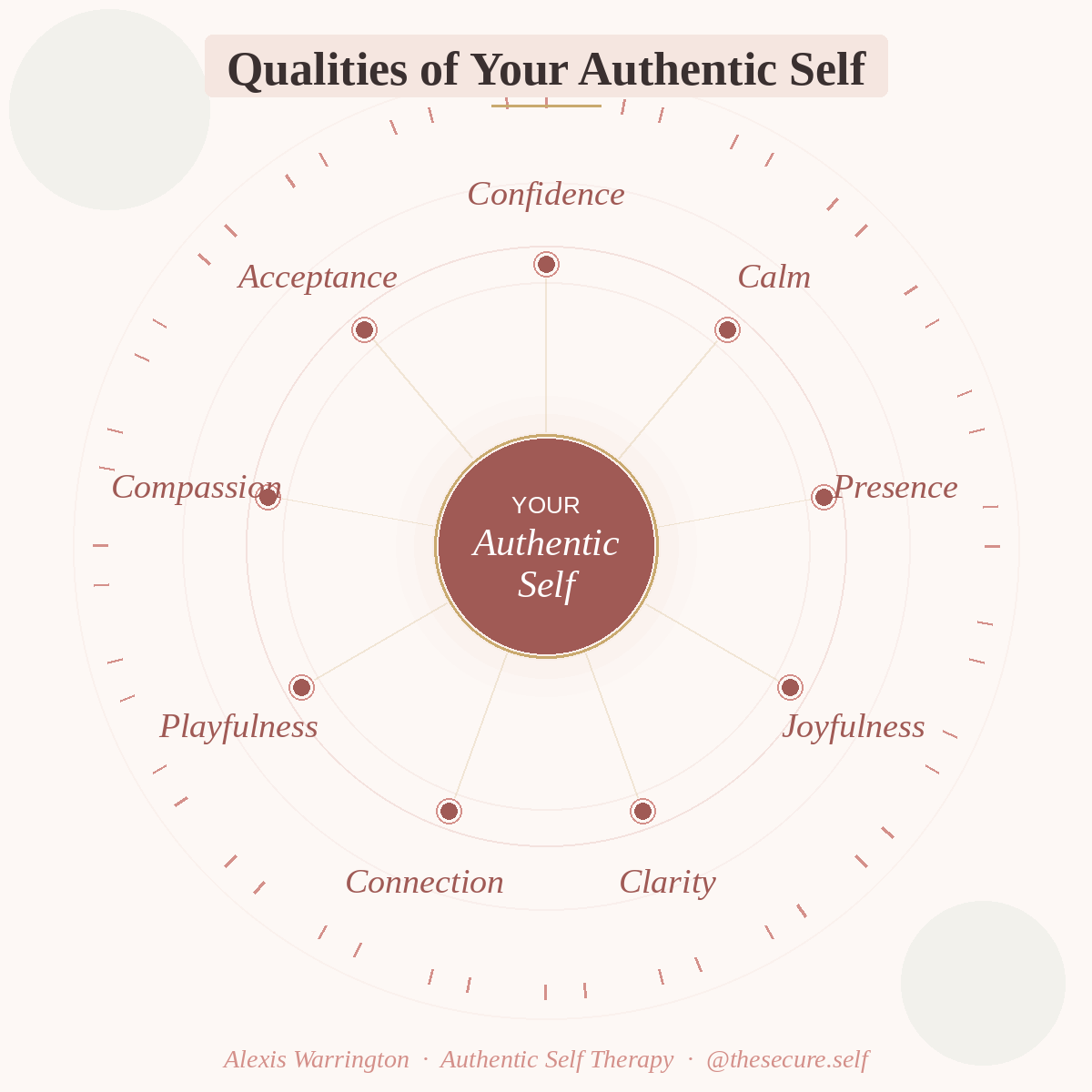
Qualities of the authentic self emerge when the inner child feels safe.
Healing your inner child is one of the most profound and loving things you can do for yourself — and it is absolutely possible, no matter where you are on your journey. If this post resonated with you, I invite you to take the next step: download my free Embracing Your Inner Child Healing Workbook, where you'll find journal prompts, affirmations, and a step-by-step guide to help you begin connecting with and nurturing that little one within. It's my gift to you. If you want to go deeper and are curious about therapy, send me a message. And if you want more tools, reflections, and gentle reminders like this delivered straight to your feed, come find me on Instagram at @thesecure.self — I'd love to continue this conversation with you there. You don't have to do this healing work alone, and you deserve a life that finally feels like your own.
